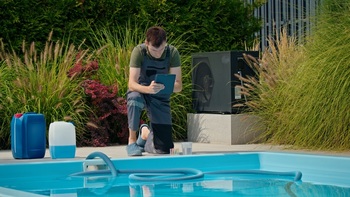




Lifeguard staffing in Dubai starts with identifying the pool’s applicable requirements, then matching qualified lifeguards to the water they must supervise. Use the pool’s risk assessment to plan observation zones, busy periods, breaks and emergency support. Confirm the final coverage plan against current Dubai Municipality guidance and any site-specific conditions.
What Are the Safety Regulations for Swimming Pools in Dubai?
Article 11 of Dubai’s Public Safety Law, Law No. (2) of 2026, sets out requirements for permanent shared pools in buildings, residential compounds, clubs, hotels and public parks. These include appointing a qualified lifeguard to the applicable Agency standards. The law came into force on 1 June 2026 and provides a compliance transition under Article 30. Dubai Public Safety Law
For a property manager, the practical first step is to identify the pool’s approved classification and obtain the current conditions that apply to that facility. Put the approval, operating hours, risk assessment and applicable authority guidance in the same working file. Give the supervisor access to the current version and record who checks it when the facility changes.
Article 30 provides a period of up to two years from commencement and allows a further extension under the mechanism in the law. Article 32 repeals the earlier 2003 local order and retains compatible implementing instruments until replaced. Confirm site-specific timing and existing obligations with the relevant authority before changing staffing or operating arrangements.
MEBS’s Dubai lifeguard services cover facilities including hotels and residential communities. A site assessment can help translate the applicable conditions into a coverage proposal. Keep the operator’s decisions about opening, occupancy and responsibility visible in the brief.
Which Pools Should Managers Assess Separately?
Identify each body of water and its operating classification before planning shared coverage. A hotel with a main pool and a separate children’s pool has different observation demands from a straightforward single rectangular pool. Account for the full layout, including any barrier or structure that affects the view or route between areas.
Start with the approved plan and compare it with the deck as guests actually use it. Movable furniture, a queue for towels, shade structures and temporary event equipment can obstruct sightlines. A seating position that works on an empty deck may be inadequate during a busy session, even when the pool dimensions are unchanged.
Review pool plant and water quality with the responsible site team. Those duties belong in the property’s operating procedures, alongside the staffing plan. The Dubai swimming pool maintenance guide covers equipment and maintenance considerations separately. For the staffing survey, record any visibility or access problem the pool team needs to resolve before opening the affected area.
When a property has both a pool and a beach, scope each assignment separately. Check the specialty and authority requirements for the setting and record how any shared emergency team will be available. A proposed transfer between posts should identify who assumes the first zone, when that happens and how the supervisor confirms the change.
How Many Lifeguards Does a Dubai Pool Need?
Determine numbers from the facility’s risk assessment, applicable guidance and approved operating conditions. Dubai Municipality’s GU81 provides recommended examples for general-use rectangular pools and a separate hotel table. Use the relevant table as a starting point, then test whether the proposed positions, relief arrangements and emergency support work at your site. Dubai Municipality GU81
| General-Use Rectangular Pool Example | Recommended Minimum | Recommended Minimum for Busy Periods |
|---|---|---|
| 20 m × 8.5 m | 1 | 2 |
| 25 m × 10 m | 1 | 2 |
| 50 m × 20 m | 4 | 6 |
These are selected examples from GU81 Table 2. Hotel operators should consult Table 3 for their own setting. Record the applicable source and the version consulted in the assessment, then note what the table leaves for the facility to decide, including how it will cover unusual features and the effect of changing use.
Agree a trigger for busy coverage that the duty manager can observe. It could involve the approved occupancy limit, an event booking or the opening of an additional zone. Ask who calls for the change, how they confirm extra coverage and what action they take when the provider cannot meet the planned demand. Include the trigger in both the operating procedure and the vendor scope.
What Does the 10:20 Rule Mean for Pool Coverage?
Dubai Municipality’s public pool guidance describes scanning an assigned area in 10 seconds and positioning the guard to reach its farthest point within 20 seconds. Apply the test to the actual observation zone. Record what the guard can see, the route they would use and how conditions affect both. Dubai Municipality GU81
Use a site walkthrough to check the proposed viewpoint and route under realistic conditions. An infinity edge, partition or reflection can hide part of the water. Inspect where bathers enter and exit, how guests move past the position and whether furniture could narrow a route. Make changes to positions or coverage if the assessment identifies a gap.
Document the zone boundaries on a marked plan and use recognizable features to describe them during handover. A lifeguard who relieves another guard should be able to locate the position and identify where responsibility changes. When zones touch, the supervisor should check who is responsible for the water near the boundary.
Retest the plan when the layout or use changes. Common reasons include changed opening hours, outdoor lighting changes, a newly reopened pool section or an event that moves equipment onto the deck. Record the finding, the adjustment and who signed it off. The same approach to repeatable checks appears in the MEBS workplace safety guide.
What Lifeguard Qualifications Should You Verify?
Before deployment, check the individual’s credential, issuing body, specialty, expiry and training record against the current Dubai scheme and the assigned role. Repeat those checks for every substitute. Keep the information accessible to authorized staff who manage deployment, and record which person completed the check and when. Dubai Municipality lifeguard scheme
Dubai Municipality’s DM-HSD-S1 version 2 describes a certificate validity limit of two years, subject to the scheme and remaining training-record validity, and a minimum of four documented hours of in-service training per month. Check the actual dates shown by the credential and training records. Request evidence of the practical assessments and renewal arrangements appropriate to the specialty.
For a procurement review, use a short record that distinguishes the permanent staffing list from people approved as relief. The record should identify:
- Each person’s assigned role, pool specialty and deployment approval.
- The relevant certificate dates and the last verification date.
- Site induction and emergency familiarisation completed before assignment.
- A nominated reviewer for expired, missing or mismatched documents.
Keep this check specific to the aquatic role. The MEBS guide to security guard duties can help clarify the separate responsibilities of reception and general security staff. Those teams can support communication or access within the emergency plan while the aquatic team follows its assigned duties.
How Do You Build a Lifeguard Staffing Plan?
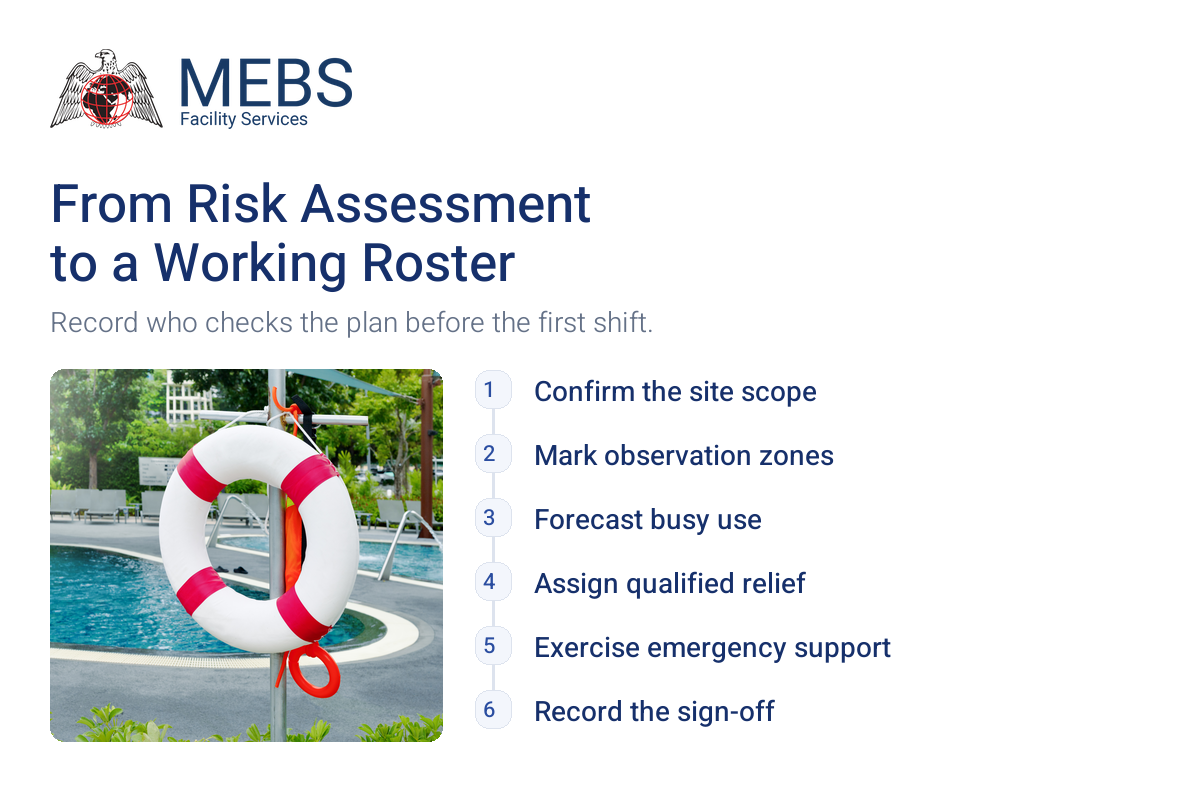
Start with the authority conditions and risk assessment, then draw observation zones, plan demand, assign qualified relief and exercise the emergency arrangements. Ask the property operator and provider to review the same plan before the first shift. Give supervisors a version they can use on the deck.
- Confirm the site scope. Gather approved plans, pool types, operating hours, user groups, applicable conditions and the person responsible for each pool.
- Mark the observation zones. Walk the deck, assess visibility and record the position, limits and access route for each zone.
- Forecast busy conditions. Use the property calendar and observed use to identify when demand or the operating layout changes.
- Assign qualified coverage. Specify primary posts, break relief and vetted replacements for each operating window.
- Check emergency support. Run a supervised exercise and verify communications, remaining-zone supervision and the route for responders.
- Review and sign off. Record open issues, the operating decision, responsible people and the triggers for the next review.
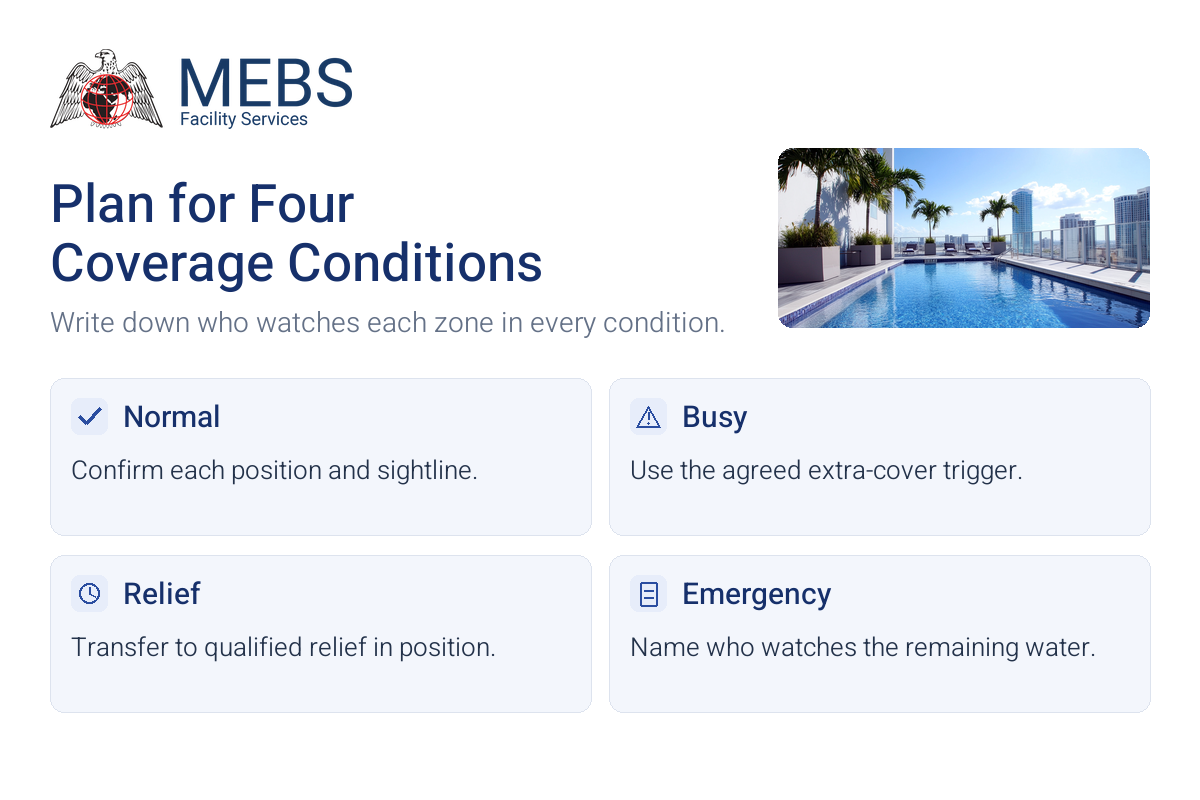
Turn the result into a worksheet with one row per zone and four states: normal, busy, relief and emergency. In each state identify the role that watches the water, who confirms they are in position and what happens if the required coverage becomes unavailable. The worksheet should make it possible for a supervisor to explain the decision without relying on the person who wrote the plan.
Plan a review after any incident or material operating change. A report that flags a repeating blind spot should lead to a change in positioning, deck arrangements or coverage, followed by a fresh check. Document the action with an owner and a review date so it carries through to the next shift.
Review Your Pool Coverage With MEBS
Share your Dubai pool layout and opening hours. MEBS can assess the site and prepare a lifeguard coverage proposal.
Request a Pool Site AssessmentHow Should Breaks and Shift Handovers Be Covered?
Write relief into the staffing plan for every open zone. Confirm the relief guard is qualified, knows the site and is in position before responsibility transfers. The duty supervisor should be able to tell who is actively watching each zone at any moment, including during breaks and between shifts.
Use a consistent handover that covers the active boundaries, current visibility, unusual activity, equipment readiness and unresolved hazards. The incoming guard confirms the assignment and the outgoing guard records the transfer using the agreed shift procedure. If the relief is delayed, escalate immediately to the supervisor and apply the site’s approved operating restrictions as needed.
Allow for travel between posts and briefings when comparing coverage hours. A roster that starts both shifts at the same minute may leave no time for an adequate transfer. Check how the provider accounts for these practical requirements and whether a reserve can reach the property on the agreed timetable.
Reception and security should know who controls admission when a zone must close. Agree the message they will give, the boundary they will enforce and the person who can authorize reopening. Use the access control planning guide to structure this handover between the pool team and the people who control entry.
What Should the Emergency Plan Cover?
The plan should identify who raises the alarm, who responds, who watches remaining bathers and who meets emergency responders. Test how those roles work when a guard leaves an observation position to respond. Keep the current contacts, access instructions and agreed equipment checks available to the site team.
Exercise the roles using the site’s approved procedure under competent supervision. Check whether staff can identify the pool entrance, give a clear location and reach the correct person without relying on a single unavailable colleague. Confirm how the operator controls or closes affected water while the response team works.
Make a record of the exercise. Include whether the call was received, whether every remaining zone had a clear owner and whether the access route was usable. Give each finding an owner and deadline. Repeat the exercise after changes that could affect the response, such as a different access gate or a revised staffing model.
Events can introduce separate questions about guest access, queues and deck obstructions. Include pool operations in the wider event briefing when the setting requires it. The Dubai event security planning guide provides a framework for coordinating control points and escalation across teams.
How Can a Dubai Hotel Handle a Busy Pool Day?
Consider a hypothetical Dubai hotel with a main pool and a separately enclosed children’s pool. The team expects increased demand during a weekend function. Its weekday roster leaves little relief capacity, and new guest seating changes the view from one observation point. The duty manager reviews the conditions before opening.
First, the manager checks both zones with the aquatic supervisor. They move the obstructing seating and verify that the observation positions still cover the intended water. The manager then confirms the required busy-period staffing and relief with the provider against the risk assessment and the relevant hotel guidance.
Next, the front desk receives the operating decision and the updated escalation route. If the approved coverage for one area cannot be provided, the operator applies its site procedure for restricting access or closing that zone and tells guests what is available. The plan also identifies the supervisor who can authorize a change later in the day.
After the event, the team records the busy-period trigger, any coverage gaps and what changes should be made before the next function. This leaves a usable record for the next manager, along with a clearer briefing for the provider. The example illustrates a planning decision and does not describe a MEBS client or incident.
What Should a Lifeguard Staffing Quote Include?
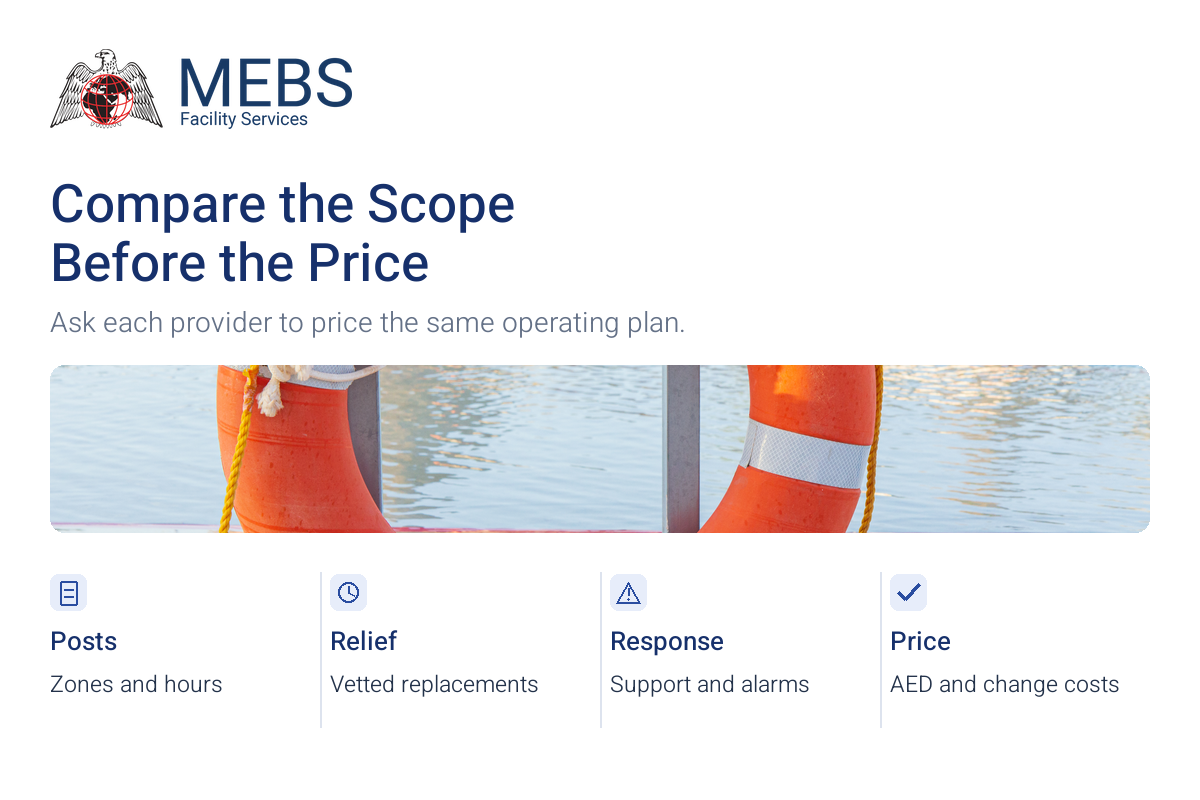
Ask for a written scope that shows which zones will be covered, when they will be covered, who provides qualified relief and how emergency support is arranged. Compare quotes against the same operating hours and site conditions. Request the cost of agreed changes separately so you can compare like-for-like proposals.
- Operating window. Confirm the pool opening hours, post locations and any event or peak demand periods.
- Named accountability. Identify who supervises the shift, clears relief staff for duty and escalates missing coverage.
- Credentials and induction. Specify the records required before deployment and who checks replacements.
- Equipment and reporting. Agree which party checks equipment, how incidents are recorded and when concerns reach management.
- Commercial assumptions. Ask for a written AED price and the basis for extra hours, revised zones and short-notice changes.
Request a sample shift record and ask the provider to walk through a relief absence. The answer should name an action, an owner and a way to confirm coverage before the pool remains open. Compare that answer with the service description and record any responsibility left with your staff.
The final commercial scope should show both the planned coverage and the assumptions used to price it. If the deck layout, facility hours or guest activity changes, ask for a reviewed scope before treating the earlier estimate as a commitment. MEBS can review these details during a Dubai site assessment.
What Evidence Should the Supervisor Keep on Site?
Maintain a working record of the approved coverage plan, verified credentials, relief arrangements, operational checks and changes during the shift. Use the information to make decisions during the day and to show what happened later. Keep sensitive credential details restricted to the people who need them.
Build the daily record around practical decisions. At opening, record the active zones, assigned staff and checks that affect readiness. When a pool area changes status, record the time, reason, person responsible and who received the update. During a handover, capture the transfer of responsibility for the relevant zone.
Close the loop on exceptions. A fault in an alarm, a recurring visibility issue or a delayed relief guard should lead to an assigned action and a decision about whether the affected area can operate. Note when the issue was resolved and who verified the result.
The operator can review these records with the provider to identify patterns and improve the plan. A persistent issue across shifts may point to a weak coverage assumption or a process that is hard to follow under pressure. The MEBS security services overview explains how aquatic coverage fits alongside other site security responsibilities.
When Should You Reassess Lifeguard Coverage?
Reassess coverage whenever the pool layout, operating hours, expected attendance, staffing or emergency arrangements change. Review it after incidents, near misses and any condition that makes the approved plan difficult to follow. Record the decision and communicate the updated arrangement to everyone who controls the affected area.
Use a review trigger that makes sense for the site. Hotel operators can review the coming events calendar and flag changes that affect pool use. Residential managers can check recurring demand and upcoming facility works. Both should know where the most recent signed plan is held and which team members need to see the update.
Bring a marked pool plan, recent risk assessment, proposed opening hours and examples of likely peak demand to a provider walkthrough. Ask for a staffing proposal that explains how each zone is covered, how relief works and how the team will coordinate with property management in an emergency.
Where a point about the facility’s legal classification or transition remains open, record the question and seek a current answer from the competent authority. Build the staffing decision around the written result and the conditions observed on the deck. That gives managers, supervisors and providers a shared basis for reviewing the service as conditions change.
Plan Coverage for Your Dubai Pool
Talk to MEBS about observation zones, relief and busy periods for your hotel or residential pool.
Discuss Lifeguard Staffing